Skip to content

Wellstead is in preview — not accepting orders.

What about the water in your house?

Most of us turn on the tap and don’t think twice. Some people notice spots, stains, a smell, or a leak; others are simply curious. Start by learning what may be worth knowing about your home’s water—without a sales pitch.

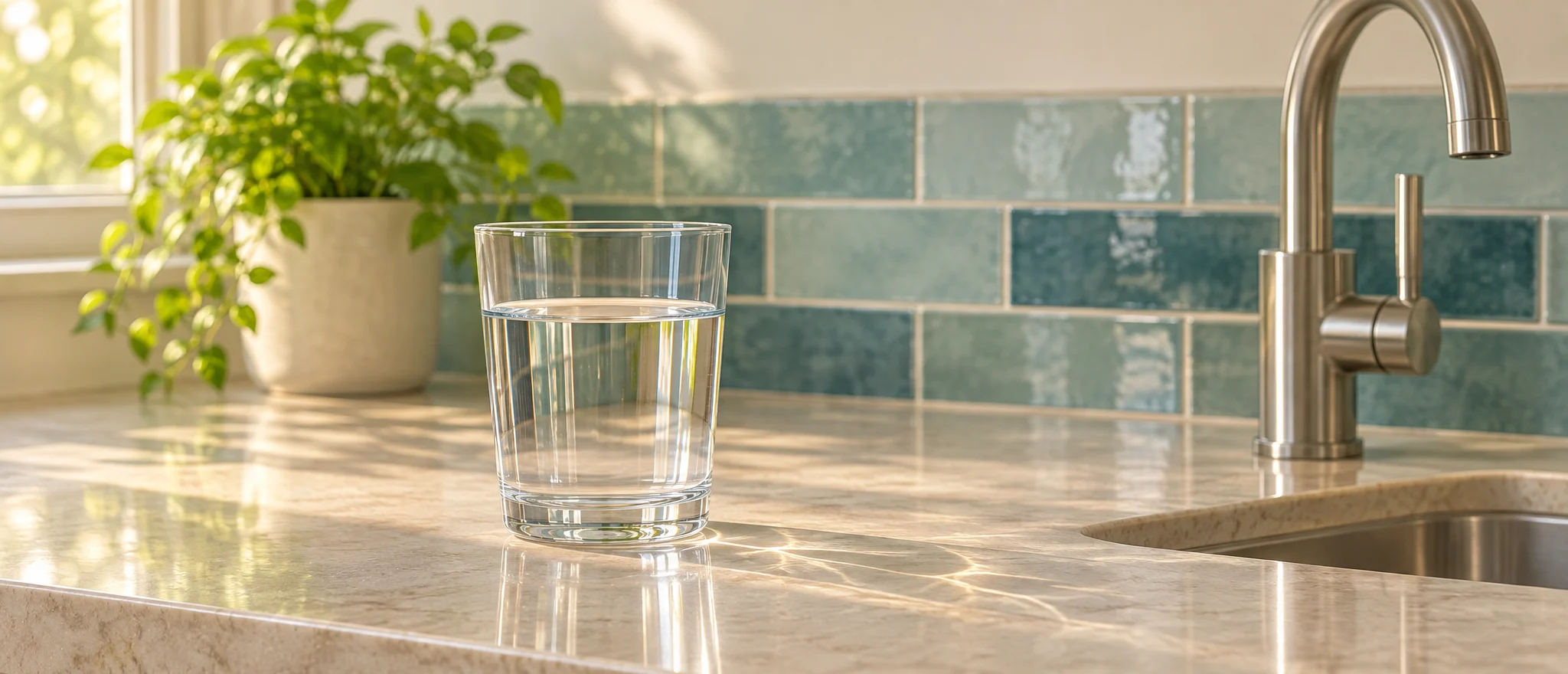
A clear glass of water on a sunlit kitchen counter beside a faucet and teal tile.

Three different questions, each with its own answer

Water quality, hardness, and leaks often get lumped together. They’re separate questions, and each one starts in a different place.

  • Water quality

    What’s in your drinking water. A utility report describes the water system as a whole. A targeted tap test can add information about one particular sample from your home.

    Learn about water quality

  • Hardness

    Calcium and magnesium can contribute to scale, spots, and needing more soap. Hardness is generally a comfort and plumbing issue, not a health concern on its own.

    Learn about hardness

  • Leaks

    Water where it shouldn’t be is a plumbing and property issue. A lab test can’t repair it, so the next step is a shutoff valve or a plumber.

    Learn about leaks

Already have a concern? See a few next steps.

Answer a couple of quick questions to see educational next steps for your situation.

Prefer to read? Go straight to the water quality, hardness, or leak guide.

Your self-check

What are you noticing?

Choose all that apply.

This isn’t a form. Your answers stay on this page while you use it. Nothing is saved, and no details are collected.

Water quality: what a report or a test can tell you

Most drinking-water questions start in one of three places: city water, a specific chemical you’ve heard about, or a private well.

What a test result covers

A result describes only the sample that was tested: that tap, that moment, and the analytes on the lab’s list. It can’t establish that water is safe at all times, and it says nothing about things that weren’t tested.

If your water comes from a city or utility

  • Your utility treats and monitors water for its system, and publishes the results in a yearly Consumer Confidence Report.
  • That report is system-level. It isn’t a measurement of every home’s tap.
  • Service lines, household plumbing, and fixtures can affect what comes out of an individual tap. A targeted tap test can add information beyond the utility’s report.
PFAS, plainly

  • PFAS are a large family of persistent, man-made chemicals.
  • The useful question is what specific exposure information exists for you. On public water, start with your utility’s monitoring results. With a private well, look for appropriate local information.
  • PFAS may need a specific analysis and may not be included in ordinary test panels.
  • A test covers only its listed analytes, from one sample at one time. Data for your area isn’t a measurement of your home.

If you have a private well

  • Well owners generally carry more responsibility for checking their own water, and testing recommendations vary by location.
  • Start with your local health department’s guidance, and use a properly certified lab for the purpose you have in mind.
  • Consider testing after well work, after flooding, or after a noticeable change in taste, color, or smell.
  • No single test panel answers every question.
Clear drinking glasses drying on a striped towel beside a faucet and a white kettle.

Hardness: spots, scale, and soap

Hardness is the amount of dissolved calcium and magnesium in your water.

  • It’s generally not a health concern, though it may cause scale, soap scum, or spots on glasses and fixtures.
  • EPA has no health standard for hardness.

Read USGS on water hardness (opens in a new tab)

About softeners

Softeners can help with scale and soap use, and they add sodium to the water. If you’re limiting sodium, ask about a bypass for the kitchen tap.

Deciding whether to explore one

A simple hardness measurement may be enough to decide whether a softener is worth a closer look. If it is, weigh:

  • Size for your household
  • Ongoing maintenance
  • Water use
  • Total installed cost

Leaks: a repair question, not a lab question

Water where it shouldn’t be needs a fix, not a test result.

Seeing an active leak right now?

If water is where it shouldn’t be, or your water bill suddenly spikes, shut off the main water valve if it’s safe to do so and contact a licensed plumber promptly. This is a repair issue, and a lab test won’t fix it.

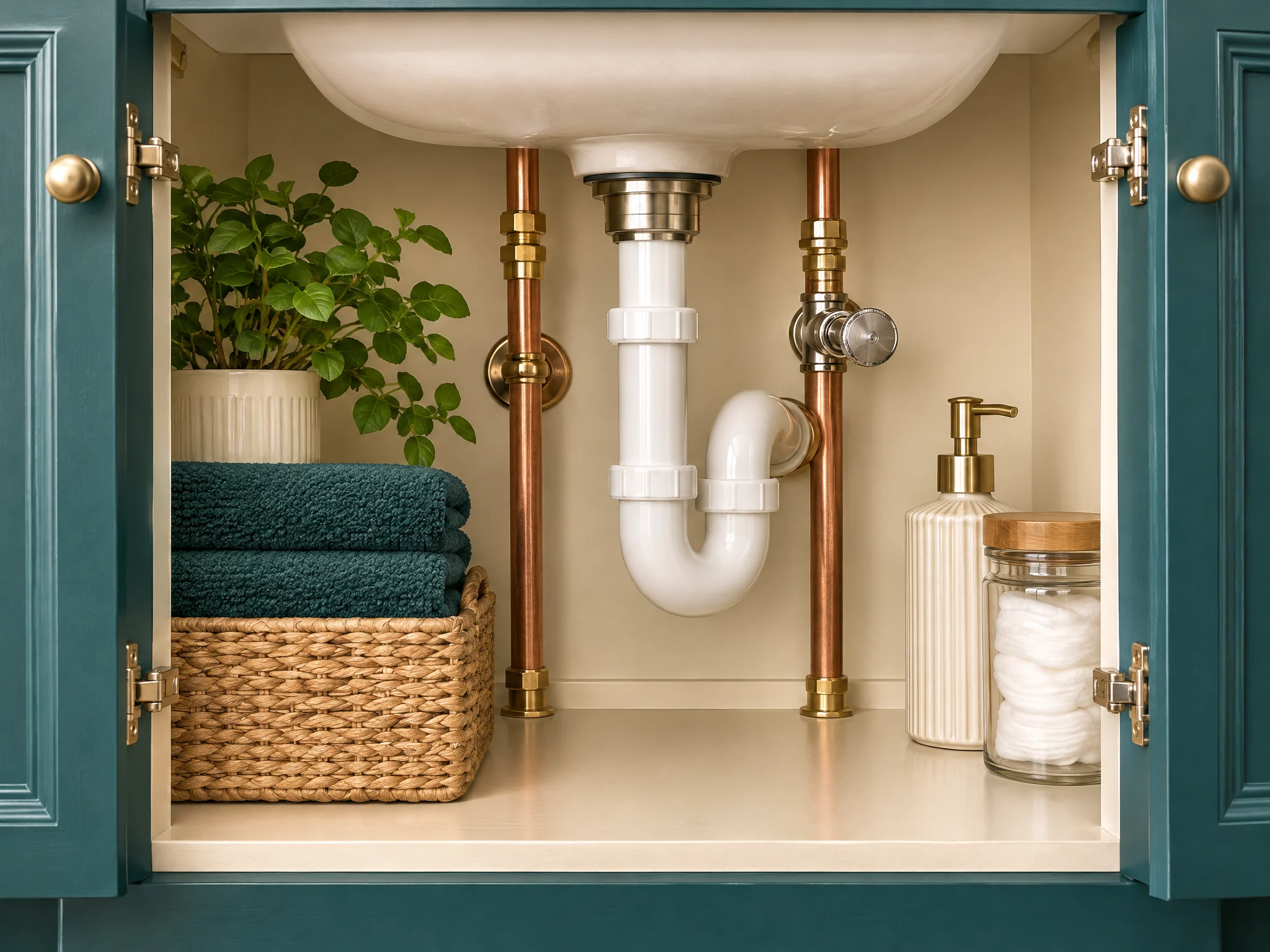
A tidy, dry cabinet under a sink with copper supply pipes and a shutoff valve.

Two simple checks for peace of mind

Meter check

Note your water meter reading, then use no water for two hours. If the reading changes at all, you probably have a leak.

Toilet dye check

Add a few drops of food coloring to the toilet tank. If color shows up in the bowl after 10 minutes without flushing, the toilet is leaking. Flush afterward so the tank doesn’t stain.

See EPA WaterSense leak guidance (opens in a new tab)

How Wellstead is designed to help

This is how the service is planned to work once it launches.

Wellstead is in preview and isn’t taking orders. None of these steps are available yet.

  • Learn

    Start with plain-English guides like the ones on this page.

  • Name the concern

    Answer a few questions to pin down what you’re actually wondering about.

  • Compare options

    See what each option can and can’t answer before choosing anything.

  • Get it in writing

    Receive a written recommendation and an itemized quote for a suitable starting point. Sometimes that’s no test at all.

  • A lab kit, if you choose one

    If you choose it and it’s offered later, Wellstead would coordinate ordering a lab kit to your home.

  • Understand the results

    Wellstead would explain the results and suggest a supported equipment category, or a model only when the evidence fits. Sometimes the answer is no purchase.

  • Installer help, optional

    Wellstead could help coordinate an installer. You would contract with and pay the installer directly.

  • Follow-up

    A set period for follow-up questions, with a clear end.

Testing options: examples, not offers

Lab panels differ a lot in what they cover. These four retail examples from one test vendor, Tap Score, were listed on November 8, 2026. They aren’t Wellstead prices or offers, and the vendor’s prices and panels may change.

  • Tap Score Essential City

    Made for
    City water
    What it covers
    49 analytes, including lead, arsenic, copper and other metals, nitrate, fluoride, hardness, pH, TDS, and a chlorine strip
    Not included
    Bacteria, PFAS, VOCs
    Vendor retail price, Nov 8, 2026
    $189
  • Tap Score Advanced City

    Made for
    City water
    What it covers
    111 analytes; adds VOCs and more
    Not included
    PFAS, bacteria
    Vendor retail price, Nov 8, 2026
    $299
  • Tap Score Advanced City + PFAS

    Made for
    City water
    What it covers
    129 analytes, including 18 PFAS
    Not included
    Bacteria
    Vendor retail price, Nov 8, 2026
    $399
  • Tap Score Essential Well

    Made for
    Private wells
    What it covers
    54 analytes; adds coliform, E. coli, nitrite, and turbidity
    Not included
    PFAS, VOCs
    Vendor retail price, Nov 8, 2026
    $209
  • These are dated vendor-retail illustrations only. They aren’t a price promise, a discount, or a Wellstead offer.
  • Any kit choice, its current price, and its timing would need to be confirmed in a written quote. Lab turnaround varies by panel and vendor.
  • These are home-information tests, not regulatory or real-estate compliance tests.

What a quote would look like

If and when Wellstead offers its service, each part would appear as its own line item in a written quote, before you commit to anything.

Equipment and installation would be billed by the installer you choose, not by Wellstead.

Wellstead isn’t taking orders or payments today.

Written quote

Illustration

  • Lab kit

    Only if a test is the right starting point

  • Wellstead coordination and recommendation fee

    Listed on its own line

  • Installer coordination

    Optional

Equipment and installation: billed directly by your chosen installer

Common questions

Do I need a test?

Not always. A hardness question, a leak, or your utility’s report may answer what you’re wondering without a lab test.

Will a test tell me my water is always safe?

No. A result is limited to its sample, the time it was taken, and the analytes the lab listed.

Can an address tell me what’s in my home’s water?

No. Area or utility data can help shape your question, but it doesn’t measure your home’s tap.

What if results need attention?

Compare each listed result and its limit with relevant health guidance. Then talk with the lab, your utility, your local health department, or a clinician, whichever fits. Wellstead doesn’t diagnose health conditions.

Start with the question you actually have.

Back to the three paths